Kith, Like Us

Lead your people: claws, chitin, and many eyes. Swarm the maze in this reverse tower defense game.

Reclaim your alien planet by breaking the Grid's automated defenses. You are the Kith, creatures that learn to live together, humans and beasts, held together by the tendrils.

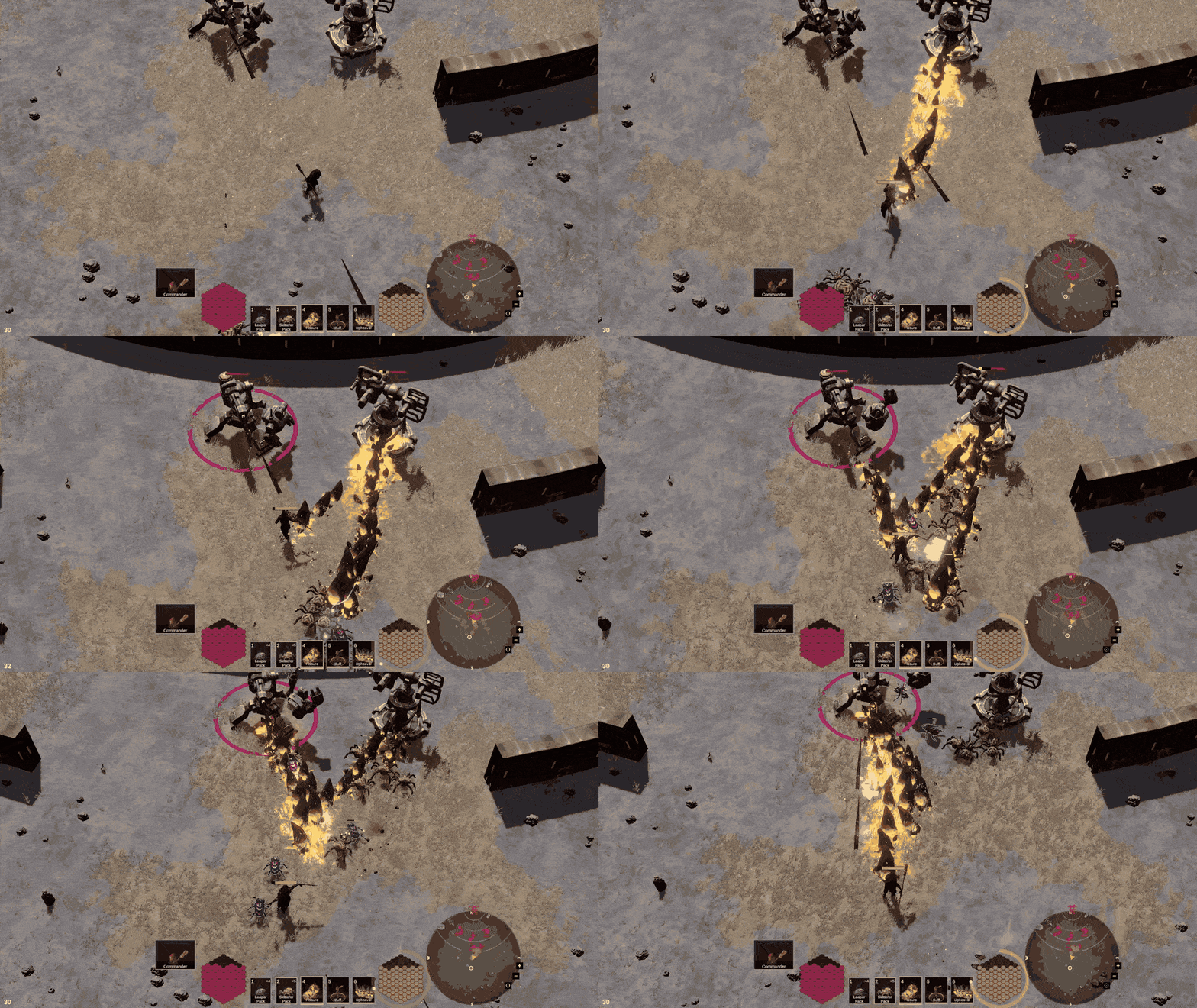
The Kith surge a turret line; a Repulsor wave flings minions and projectiles back.

Kith, Like Us is a reverse tower defense game. You lead the Kith through an intricate maze: pick your hero, your beasts, and push through corridors full of automated turrets and droids. Reach the hub for a final boss fight.

Every level is a puzzle with more than one answer. The turrets own the sight lines, so you learn what to take out first: the gun, or the relay that powers it. Storm the front and trade lives for tempo, or take the quiet road: walls can be leapt, and the alarm beams sweep on a rhythm you can wait out, or trip on purpose with your cheapest beast while the rest of the team slips through.

Action-packed real-time strategy, with you in it. The camera follows your hero and your team, and the fight is wherever you are standing. No base to build, no build order to memorize, no second screen to manage.

The planet was supposed to be ready for them. Instead, the colonists survived by adapting to the local fauna, generation by generation, until there was no line left between the two. They are one people now, the Kith: humans and beasts, sheltered by the tendrils, plant roots that reach all of this world.

Then the terraforming fleet arrived, centuries late, set to prepare the planet for colonization. Its machines ran their protocol without hesitation: clear hostile wildlife, prepare for human habitation. The fleet no longer recognizes you. The Kith fight to survive.
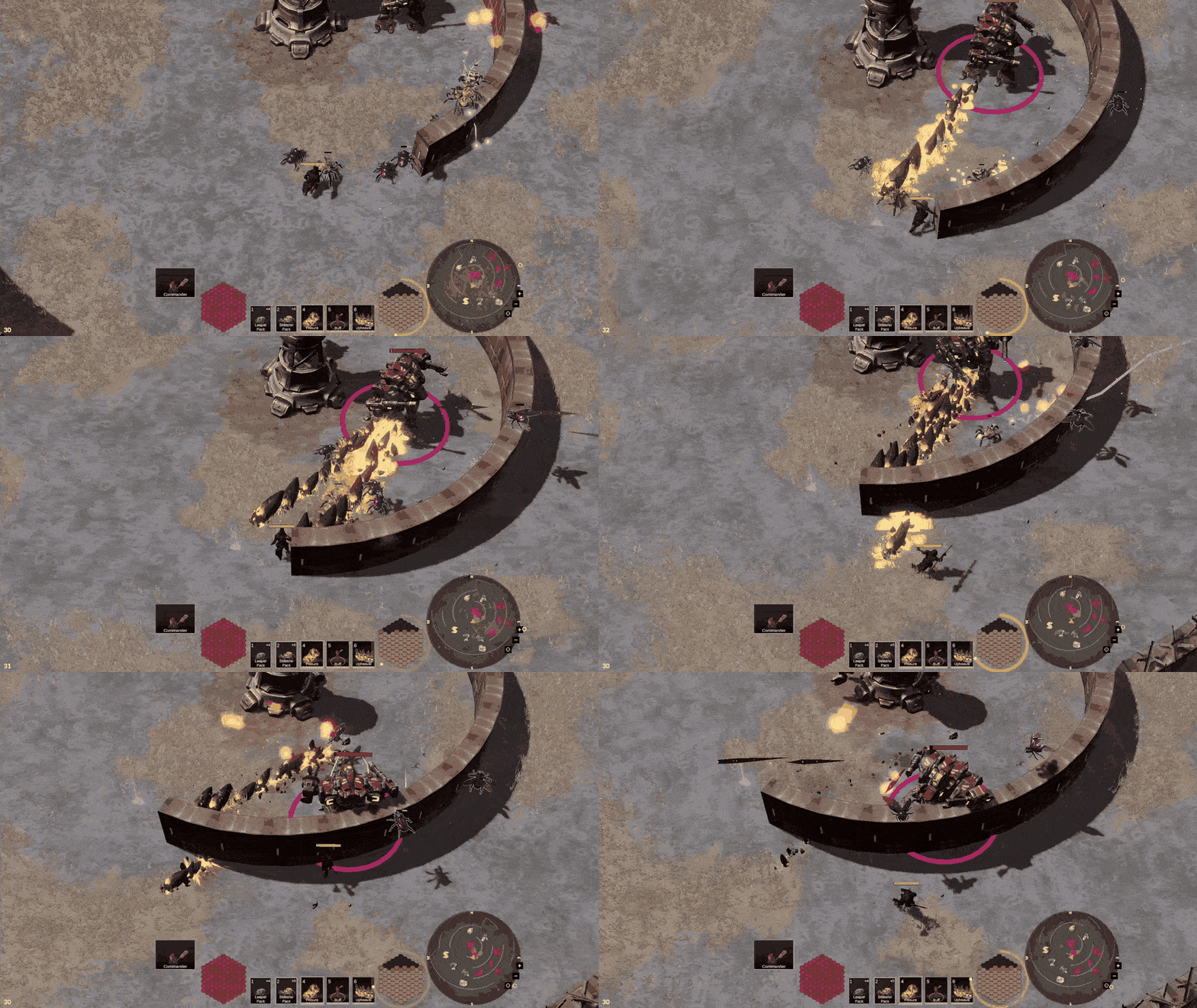
A mech boss advances on the swarm, its flamethrower sweeping; minions scatter and flank.

How it plays

The gauntlet is the level, and you are the wave.

  • No base to build. Capture the maze instead. Need more Kith? Take a sector. Stand on its energy source and your gateway rises out of the ground like a flag, no button to press, and then it pays you the resources that field your army and knits up whatever stands beside it, for as long as you hold it.
  • Several teams, one budget. Every beast costs resources to field: one for a swarmer, two for a bomb-lobber, three for a shield that walks in front, four for a sapper that shuts a turret down. Each team does something the others cannot, and each costs what it is worth.
  • Adapt to every turret cluster. One team is on the field at a time, and calling the other one is the switch: the team you had dissolves back into the gateway and returns what it cost, and the new one climbs out to meet you. The bodies you lose are bought back out of the same pool, so a bad trade is paid for twice. Some clusters are worth a direct attack. Others are better walked around.
  • Explore. Not every wall is an obstacle. Some can be leapt, some breached, some simply open, and some are blast doors waiting for the keycard you have not found yet.
  • The final boss waits in the center. Do not be fooled by the Grid's patience. Trip an alarm and it calls in reinforcements. Advance too fast and its droids come for you from behind, from corridors you thought cleared.
Vael's beasts go over a sheer wall the ground team would have to walk around, and take the turret nest behind it.

🛠️ The Workshop

Every encounter is a maze of turrets, walls and zones, and the tool the official maps are built with is free in your browser.

Draw the maze or auto-generate one. Place the turret line, the locked doors, the keycards, the caches. Then hit Simulate: a bot fights its way through your map and hands back a scrubbable replay, plus a diagnostic showing where the attack died and which entries it never touched. Tune it, re-simulate, and when it's right, download the JSON. The most-loved community encounters will inspire official content at release.

The three maps the companion build ships with, all drawn in this editor: turret lines, destructible walls, mined lanes, caches off the route.

The Ribcage: a spiral corridor winding through six rings, each stretch holding one turret behind a wall with its power hub out on the corridor, plus a mined lane and caches off the line.
The Ribcage: the wall protects them more than it protects you.
The First Drip: a four ring map with two entries, a gun post on each approach passage, and the caches and the hub cluster the attack has to take to keep earning.
The First Drip: you stop spending and start earning.
The Three Mouths: three lanes converging on the core, every way inward a destructible wall, with the caches and relays in side pockets that have to be breached too.
The Three Mouths: change the tool, not the effort.

Open-format JSON. No account required to design.

Open the editor →